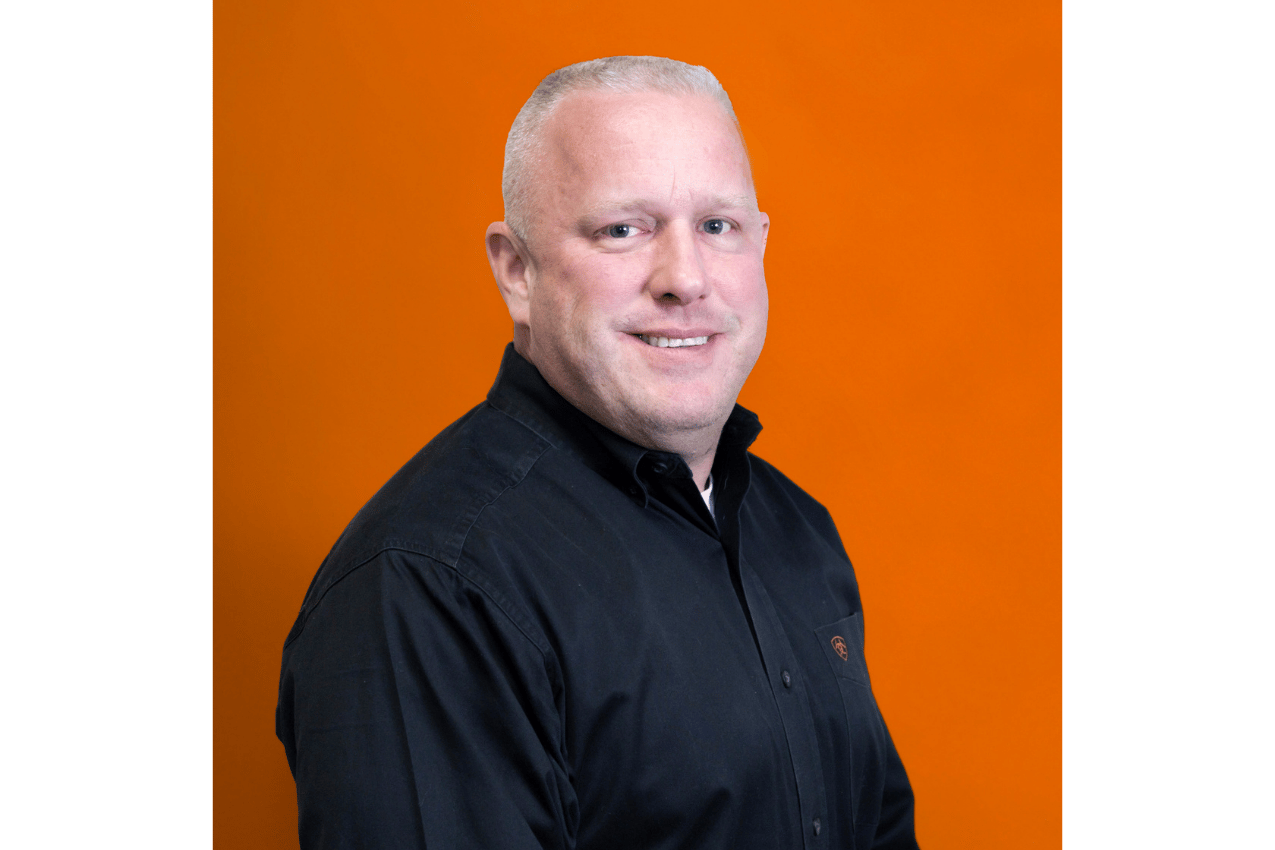
Moving from military service to business ownership requires a blend of mission focus, adaptability, and proven leadership. For Elliott Henson Jr., a former active-duty Airborne Ranger with the 3rd Ranger Battalion, franchise ownership became the natural bridge to civilian entrepreneurship.
Alongside his wife, Cayley, Elliott partnered with Spherion to build a thriving staffing business rooted in complementary strengths and core military values. Here, he shares what drew him to the brand, how his service shaped his leadership style, and his best advice for fellow veterans considering their next mission in business.

Why did you choose the franchise brand that you did?
Choosing Spherion was really a decision that grew out of the combination of my wife Cayley's experience and my own.
Cayley worked for Spherion when she was 19 years old at an onsite operation in Victoria, Texas. She had a very positive experience there. She came to know Spherion as a company that treated people well and had a business structure she respected. Years later, when we began looking for a business opportunity of our own, she remembered that experience and suggested that we take a closer look at Spherion.
That became the starting point for us.
Cayley's professional background is in human resources and staffing. Most of my background outside the military has been in sales and business development. The more we looked at the staffing industry, the more we realized how naturally our strengths complemented one another. Cayley understood the people-focused, HR, recruiting and operational aspects of the business. At the same time, I was comfortable building relationships, developing clients, selling our services and planning for growth.
Spherion gave us the opportunity to combine those strengths within an established franchise system. We weren't simply buying into a recognizable brand. We were joining a company Cayley already knew and believed in from personal experience.
Looking back, Cayley's experience with Spherion was pivotal to the direction we ultimately took. She helped lead us to the staffing industry. Meanwhile, Spherion offered a structure that allowed us to combine our different professional backgrounds into a business we could build together.
For us, that made Spherion more than a franchise opportunity. It became a business that fit who we were as a team.

How has your military experience helped you as a franchisee?
My military experience has influenced almost every aspect of how I approach business. I served seven years on active duty in the Army as an Airborne Ranger with the 3rd Ranger Battalion. In that environment, you learn very quickly that accomplishing the mission requires discipline, preparation, adaptability and teamwork. Notably, you gain the ability to make decisions when conditions are far from perfect.
Those lessons translate directly into entrepreneurship.
The military taught me to focus on the mission while taking care of the people responsible for accomplishing it. In business, the mission may be different, but the principle is the same. You establish the objective. You build the right team and give people the tools and training they need. Then you hold yourself and the team accountable for the outcome.
My service as a Ranger also taught me that plans rarely survive unchanged once the mission begins. You prepare extensively. But when circumstances change, you assess the situation, adapt, and continue moving toward the objective. Business ownership requires that same mentality. Markets change, clients change, employees change, technology changes, and unexpected problems are inevitable. You cannot become paralyzed every time the plan changes.
The greatest lesson I carried from the military into business is that leadership is responsibility. Rank or title may give someone authority, but you earn leadership through trust, competence, consistency, and a willingness to carry responsibility when things become difficult.
Both as a franchise owner and now through my work representing other franchisees on Spherion's Franchise Advisory Council, I continue relying on those lessons. Leadership isn't about having all the answers. It is about understanding the mission and listening to the people closest to the problem. Then making the best decision you can with the information available and accepting responsibility for the result.

"The greatest lesson I carried from the military into business is that leadership is responsibility. Rank or title may give someone authority, but you earn leadership through trust, competence, consistency, and a willingness to carry responsibility when things become difficult."
What advice would you give to other veterans or current armed forces members considering franchise ownership?
My advice to veterans considering franchise ownership would be: Don't underestimate how much of your military experience can transfer to entrepreneurship. But don't assume that military success automatically guarantees business success, either.
Veterans already possess many qualities that are difficult to teach: discipline, resilience, accountability, teamwork, mission focus and the ability to perform under pressure. Those are tremendous advantages in business. But entrepreneurship requires another skill that can be challenging for people from highly structured military environments. You learn to operate when there isn't always a clearly defined mission, established procedure, or chain of command telling you what comes next.
That is one reason franchising can be a strong bridge between military service and entrepreneurship. A good franchise provides a proven framework, training, systems, resources and a network of experienced supporters. You lead and build the business in your local market.
I encourage veterans to do their due diligence and look beyond the brand name. Talk to existing franchisees. Understand the economics. Understand what the franchisor provides and, equally important, what it expects from you. Make sure the culture and business model align with the way you want to lead.
And then recognize that ownership changes the definition of responsibility. There is no one above you who ultimately owns the outcome. Your employees and their families may depend on the decisions you make. Your clients depend on you. Your own family has a stake in those decisions as well.
For veterans, that responsibility may feel familiar. You have already learned how to prepare. You know how to lead people. You've already practiced how to adapt when circumstances change. Most importantly, you know how to keep moving when things become difficult.
You don't have to leave those lessons behind when you take off the uniform. Apply them to a new mission in franchising.
Elliott's journey demonstrates how military discipline, teamwork, and accountability can translate into a rewarding entrepreneurial career. Franchising offers veterans the ideal combination of operational independence and an established, supportive framework.
If you are ready to turn your leadership skills into business ownership, explore what makes Spherion one of the top franchise opportunities for veterans. Contact our franchise development team today to learn more about our business model, veteran incentives, and available territories.